
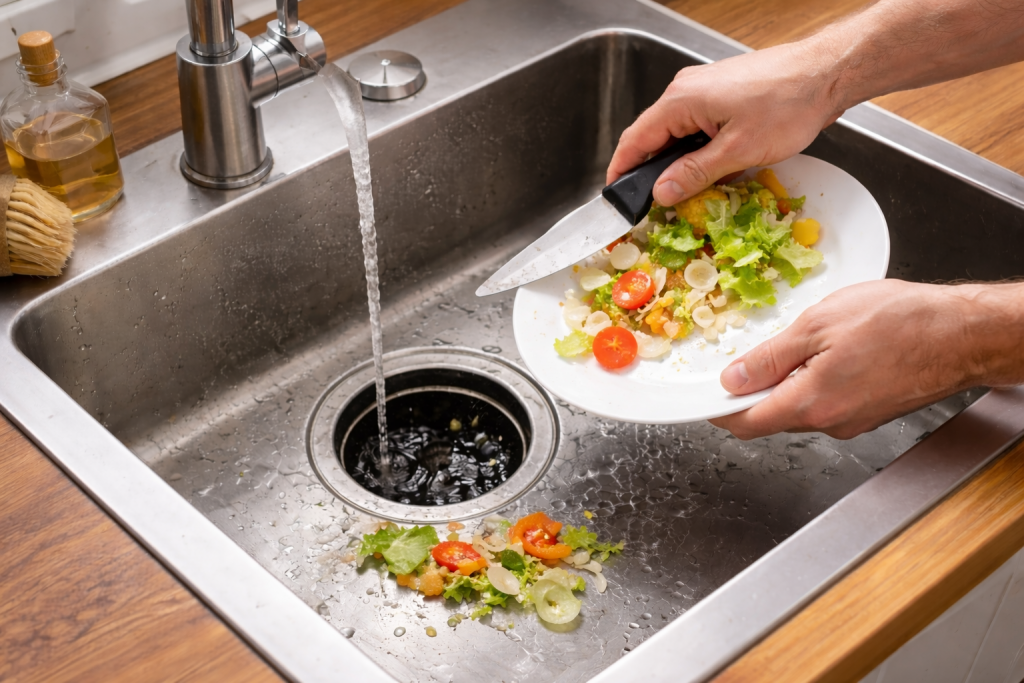
Garbage disposal care starts with one simple idea: the unit is built to handle small, soft scraps, not full meals or “whatever fits.” Therefore, when the disposal becomes your main trash can, the kitchen drain pays the price. Canadian Drains sees this all the time in Calgary homes, especially after holidays, parties, and busy weeks.
Garbage disposal care basics that prevent clogs
A disposal is basically a grinder that moves tiny bits into your plumbing. However, it cannot turn problem items into “safe” items, because the drain line still has to carry everything away. That is to say, grinding something smaller can actually make it worse if the material turns into paste, expands with water, or sticks to pipe walls.
Start with a simple routine. Firstly, run cold water before you switch the unit on, and keep it running for 15 to 30 seconds after you turn it off. Secondly, feed small amounts instead of dumping a bowl at once, because slower feeding helps the unit grind evenly. Moreover, scrape plates into the bin first and treat the disposal as a finishing tool, not a primary disposal method.
If your sink drains slowly or smells “earthy” even after cleaning, it can point to buildup in the line. Consequently, a targeted visit for kitchen drain cleaning Calgary often restores flow and removes the gunk that everyday rinsing cannot reach.
What never belongs in a garbage disposal
People usually get into trouble with the same categories. For instance, starchy foods like rice, pasta, and potato peels can swell and create a heavy sludge in the trap and branch line. Grease is another big one, because it cools and coats the pipe, and then everything else sticks to it. Coffee grounds seem harmless, but they settle like sand and pack tightly, so they quietly reduce the pipe’s inside diameter over time.
Fibrous foods are also a problem. Celery, corn husks, onion skins, and artichokes can wrap around the impellers, so the motor strains and the grind becomes uneven. Bones and fruit pits are risky too, because they can jam the unit or damage components. In other words, if it is tough, stringy, sticky, or greasy, it belongs in the compost or garbage, not the disposal.
The “trash can habit” that makes issues show up faster
Many clogs start when someone rinses a greasy pan, then follows it with starch. Meanwhile, the grease coats the pipe and the starch binds to it, creating a thick paste that traps more debris. After that, even normal dishwater can’t move the mass, and the sink begins to back up.
If you suspect a bigger restriction past the cabinet plumbing, Canadian Drains can handle a full-line service through drain cleaning in Calgary to clear the pathway properly.
Quick home checks before you assume the disposal is “broken”
A humming disposal with no grinding often means a jam. Therefore, turn power off at the switch or breaker and never reach inside. Use the manufacturer’s hex key slot underneath if your model has one, and rotate back and forth to free the jam. Then, press the reset button on the bottom, run cold water, and test again.
If the unit runs but the sink drains slowly, the issue may be the drain line, not the disposal. For example, if water rises in one bowl and gurgles in the other, that can indicate a partial blockage downstream. Also, if odors return quickly after cleaning the splash guard, that can point to buildup deeper in the pipe.
When the pattern is recurring, it helps to stop guessing. Most importantly, a camera inspection shows exactly what is happening inside the line, so the fix matches the cause instead of relying on trial and error.
When the problem spreads beyond the kitchen
A disposal problem can show up as a “whole home” draining issue if the main line is already stressed. However, many homeowners notice it first in the kitchen because that line sees heavy daily use. If you also have slow tubs, gurgling toilets, or a damp smell near floor drains, it may be time to check other branches.
Canadian Drains supports homeowners with bathroom drain cleaning Calgary when sink, shower, or tub lines start acting up, because those clogs often build differently than kitchen clogs.
A simple disposal-friendly habit plan
Think of this as garbage disposal care you can actually keep up with. Firstly, scrape and bin the big stuff, then send only small soft scraps down the unit. Secondly, keep grease, starch, and grounds out completely. Moreover, use cold water every time and avoid chemical drain cleaners, because they may not remove the blockage and can be harsh on plumbing.
If you want a clear baseline, a proactive service can remove existing buildup so your new habits actually work. Consequently, booking through Canadian Drains gives you a starting point where the line is clean, the flow is normal, and future changes are easier to notice.
FAQs
Can I put eggshells in the garbage disposal?
It is better not to. Therefore, eggshell fragments can combine with grease and other debris to form gritty buildup in the trap and drain line. In addition, tossing shells in the compost or garbage reduces the chance of slow drains later.
Why does my disposal smell even after I clean it?
Odors often come from buildup past the disposal throat. However, cleaning the rubber guard only treats the surface area you can reach. Consequently, a deeper line cleaning may be needed when smells return within a day or two.
Is hot water better than cold water for running the disposal?
Cold water is usually safer during grinding. That is to say, cold water helps keep fats more solid so they are less likely to smear along pipe walls. After that, the water flow can carry small particles away more effectively.
What should I do if the disposal is humming but not spinning?
Turn off power first and do not put your hand inside. Therefore, use the underside hex key slot if your unit has one to free a jam, then press the reset button. If it still won’t spin, a technician should check for internal damage.
How do I know if I need a professional drain cleaning instead of a new disposal?
If the unit runs but the sink drains slowly, the issue is often in the pipe, not the motor. Moreover, repeated backups, gurgling, or water coming up in a second sink bowl usually points to a line restriction that cleaning can solve.