
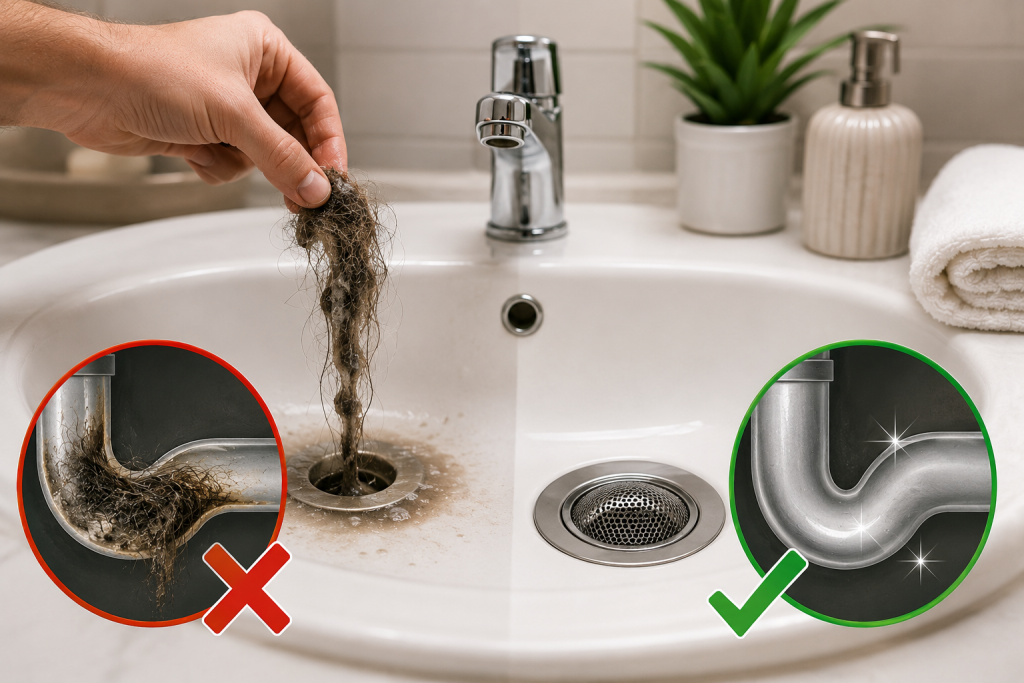
Your bathroom drain clogs again. You cleared it two months ago. Now it is slow again. This cycle frustrates homeowners across Calgary every single week. However, professional bathroom drain cleaning combined with the right habits breaks that cycle for good.
Canadian Drains helps homeowners understand why clogs return — and what actually stops them.
Why Bathroom Drains Keep Blocking
Most people blame hair. Hair is certainly a major factor. However, the real problem is the combination of hair, soap scum, and mineral deposits. Together, these three things create a sticky layer on pipe walls. Consequently, debris catches on that layer and builds up rapidly.
Furthermore, rinsing products like conditioner, shaving foam, and body scrubs add to the accumulation. These products contain oils and waxes that cling to pipe walls. Over time, the pipe narrows significantly. Even small amounts of hair then cause slow drainage.
The Problem With DIY Fixes
Plungers help temporarily. However, they push clogs further down the line rather than removing them. Chemical drain cleaners dissolve surface blockages but leave residue behind. In fact, repeated chemical use corrodes older pipe walls and creates new problems.
Store-bought drain snakes reach surface clogs only. They miss debris stuck to pipe walls 30 to 60 centimetres deeper in the line. Therefore, the clog returns within weeks. Professional tools reach further, clean more thoroughly, and protect your pipes in the process.
What Actually Works Long-Term
Consistent habits make a real difference. Specifically, a few small changes reduce clog frequency dramatically:
Use a Drain Cover Every Day
A quality drain cover catches hair before it enters the pipe. This single step reduces bathroom clogs by a significant margin. Choose a cover with fine mesh that sits flat in the drain opening. Clean it after every shower. This takes ten seconds and prevents hours of frustration.
Flush With Hot Water Weekly
Hot water softens soap scum and pushes loose debris through the line. Run the hottest tap water for two full minutes each week. In addition, do this right after showering when pipes are already warm. This habit slows buildup considerably between professional cleanings.
Avoid Oil-Based Products Near the Drain
Bath oils, oil-based scrubs, and certain hair treatments coat pipe walls quickly. Therefore, rinse these products in a bucket when possible and dispose of the water in a toilet instead. Your pipes will stay cleaner much longer as a result.
Schedule Professional Cleaning Annually
Annual cleaning removes what daily habits cannot. Canadian Drains technicians use professional-grade equipment to clear pipe walls thoroughly. Moreover, a sewer camera inspection can identify deeper issues that explain why your bathroom drain clogs more frequently than it should.
Think About the Whole Drainage System
Bathroom drains don’t exist in isolation. They connect to shared drain lines that carry water from multiple fixtures. Consequently, habits in one room affect performance in another.
For example, grease from dishes that goes down a kitchen sink reaches the same main line. Similarly, lint from the laundry room enters shared pipes. If you run your dishwasher, washing machine, and shower simultaneously on a summer afternoon, you stress the entire system at once.
Strong habits in the kitchen matter too. Canadian Drains recommends pairing bathroom maintenance with regular kitchen drain cleaning to keep the whole system flowing. Furthermore, homeowners often overlook their utility room. A slow laundry drain line puts extra pressure on bathroom drains during high-use days.
When to Call a Professional
Call Canadian Drains when your drain stays slow after two rounds of DIY attempts. Also call when you smell sewage odours, hear gurgling after flushing, or notice water pooling on the shower floor. These signs point to a deeper issue. Specifically, a partial blockage deeper in the line won’t respond to surface treatments.
In some cases, repeated clogs signal a problem in the main line. Therefore, Canadian Drains may recommend main sewer line cleaning to eliminate the underlying cause. A thorough inspection and professional clean solves the issue at its source.
FAQ
Q: How often should I have my bathroom drain professionally cleaned? Most households benefit from a professional cleaning once a year. However, homes with multiple users, long hair, or older pipes may need service every six months. Canadian Drains can assess your system and recommend the right schedule for your situation.
Q: Are enzyme drain cleaners safe to use between professional visits? Yes. Enzyme-based cleaners are much gentler than chemical alternatives. They break down organic material without harming pipe walls. However, they work slowly and won’t clear a full blockage. Use them as a maintenance tool, not a fix for an existing clog.
Q: Why does my bathroom drain smell even when it isn’t clogged? Odours often come from dry P-traps or biofilm coating the pipe walls. Running water for 30 seconds refills a dry trap. If the smell persists, biofilm buildup or a venting issue may be the cause. Canadian Drains can diagnose the source accurately.
Q: Can a slow shower drain cause damage over time? Yes. Standing water in a shower encourages mould growth on grout and caulking. Additionally, prolonged moisture exposure weakens the shower base seal over time. Fixing the drainage issue quickly protects both your plumbing and your bathroom surfaces.
Q: Is it safe to use a drain snake myself? Basic drain snakes are safe for surface-level clogs. However, improper use can scratch pipe walls or push a clog deeper. If you don’t clear the blockage on the first attempt, stop and call Canadian Drains. Forcing a stuck snake causes more damage than the original clog.