
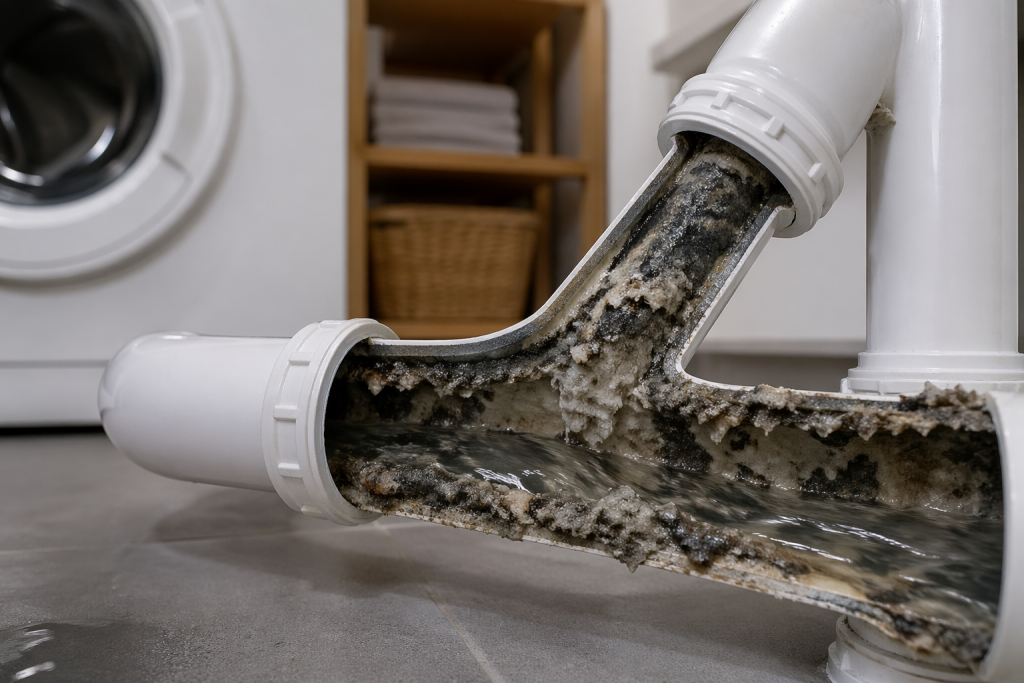
Laundry drain pressure buildup is one of the most common reasons drains fail without warning, and Canadian Drains sees this issue in homes across Calgary every week. At first, everything seems normal, but pressure begins to form inside the pipes as debris collects. Over time, this hidden stress affects flow, causes slow drainage, and eventually leads to backups that disrupt daily routines.
How Laundry Drain Pressure Buildup Starts
Every washing cycle pushes water, lint, soap residue, and fabric particles into your drain system. At first, the system handles it well. However, small materials begin to settle along the pipe walls. As a result, these materials narrow the pipe’s internal space and reduce proper flow.
Pressure increases when water cannot move freely. Instead of draining smoothly, it pushes against buildup. This creates internal stress that continues to grow with every load. In addition, modern detergents often leave behind sticky residue, which traps lint and debris even faster.
Many homeowners do not notice the problem early. That is to say, the system still drains, but it works harder each time. Eventually, pressure reaches a point where problems become visible.
Why Pressure Builds Faster Than You Expect
Laundry systems deal with more than just water. They handle fibers, oils, dirt, and chemical residue. Consequently, buildup forms faster than in other household drains. Even with careful use, small particles accumulate inside the pipe.
Older plumbing systems face higher risk. Pipes may already have rough surfaces or slight narrowing. Therefore, debris attaches more easily and builds up quicker. In contrast, newer systems may still develop pressure issues if maintenance is ignored.
High-efficiency washers can also contribute. They use less water, which means less force to flush debris away. As a result, materials settle more easily inside the line. This increases the chances of laundry drain pressure buildup forming sooner than expected.
Signs That Pressure Is Already Inside Your Pipes
Pressure inside a drain does not stay hidden forever. It begins to show through subtle warning signs. Firstly, you may notice water draining slower than usual. This often happens gradually, so it is easy to ignore at first.
Secondly, you might hear gurgling sounds. These noises indicate trapped air caused by restricted flow. In addition, water may rise slightly in the standpipe during a wash cycle. That is a clear sign of internal resistance.
In more serious cases, water backs up completely. At that point, the pressure has nowhere to go. Most importantly, ignoring these signs allows the problem to worsen over time.
Professional inspection helps confirm the cause. Using tools like sewer camera inspection, technicians can identify buildup and pressure points deep inside the system.
How Laundry Drains Connect to Other Plumbing Problems
Laundry drain pressure buildup rarely stays isolated. It often affects nearby plumbing systems. For example, pressure can push water back into connected lines, including bathroom or kitchen drains.
This creates unexpected issues in other areas of the home. You may notice slow drainage in sinks or unusual odors. Meanwhile, trapped debris continues to grow inside the system.
In some homes, the problem spreads to the main sewer line. That is when backups become more severe and costly. Therefore, early attention to laundry drain pressure buildup helps prevent larger repairs later.
Routine maintenance plays a key role. Services like bathroom drain cleaning and laundry drain cleaning help keep the entire system balanced and flowing properly.
What Happens When Pressure Is Left Unchecked
Pressure does not simply disappear. It builds until the system reaches a breaking point. At first, minor clogs slow the flow. However, continued buildup creates stronger blockages that resist normal drainage.
Eventually, pipes may develop cracks or weak points. In extreme cases, joints loosen due to constant stress. As a result, leaks can form behind walls or under floors.
Backups also become more frequent. Water may overflow from the standpipe during washing cycles. That situation often leads to water damage and costly cleanup.
Regular service helps prevent these outcomes. A professional approach, such as drain cleaning in Calgary, removes buildup before pressure reaches dangerous levels.
How Professional Cleaning Relieves Internal Pressure
Removing buildup restores proper flow and reduces pressure immediately. Technicians use specialized tools to clear debris from inside the pipes. This process targets the source of the restriction rather than masking symptoms.
Hydro jetting is one common method. It uses high-pressure water to break apart buildup and flush it away. As a result, pipes return to a clean and open state.
Camera inspections also play a key role. They allow technicians to confirm that all blockages are removed. In addition, they help detect any damage caused by prolonged pressure.
Canadian Drains focuses on thorough cleaning rather than temporary fixes. This approach ensures long-term performance and prevents repeated issues.
How to Reduce Laundry Drain Pressure Buildup at Home
Simple habits can slow down buildup. Firstly, avoid using excessive detergent. Too much soap creates residue that sticks inside pipes. Instead, follow manufacturer recommendations.
Secondly, consider using lint filters on your washing machine discharge hose. These filters capture fibers before they enter the drain. In addition, regular cleaning of the filter keeps it effective.
Running hot water cycles occasionally can help loosen residue. However, this does not replace professional cleaning. It only reduces minor buildup between services.
Most importantly, schedule routine inspections. Early detection prevents pressure from reaching damaging levels.
Why Ongoing Maintenance Matters
Drain systems work best when maintained consistently. Without care, small issues grow into larger problems. That is why Canadian Drains recommends regular service for laundry systems.
Maintenance removes buildup before pressure becomes severe. It also protects the entire plumbing system from unexpected failures. In other words, it keeps everything running smoothly.
Ignoring maintenance leads to higher repair costs later. Therefore, taking action early saves both time and money.
Laundry drain pressure buildup may not be visible at first, but it always leaves signs over time. Addressing those signs early ensures your system continues to function properly without disruption.
FAQs
What causes laundry drain pressure buildup?
Laundry drain pressure buildup forms when lint, soap residue, and debris collect inside pipes and restrict water flow.
How do I know if my laundry drain has pressure issues?
Common signs include slow drainage, gurgling sounds, and water rising in the standpipe during washing cycles.
Can laundry drain pressure affect other drains?
Yes, pressure can impact connected plumbing systems, causing slow drains or backups in other areas of the home.
How often should I clean my laundry drain?
Professional cleaning once a year helps prevent buildup and keeps the system working efficiently.
Is professional inspection necessary for laundry drains?
Yes, inspections help identify hidden buildup and prevent serious damage before it occurs.