
If you want a simple way to judge home drain cleaning needs, start with a quick two minute test you can do today. Canadian Drains sees the same early warning signs in Calgary homes, and they usually show up before a full clog hits. Therefore, catching them early can save a messy backup and a stressful weekend.
Why this quick test works for home drain cleaning
Most drain problems start as a thin layer of buildup that slowly narrows the pipe. In other words, the drain may still “work,” but it is already losing capacity. Consequently, the system becomes sensitive to normal daily use like shower hair, soap residue, cooking grease, and food bits.
This test works because it checks flow, sound, and recovery time all at once. Moreover, it helps you spot the difference between a normal slow moment and a drain that is steadily getting worse. After that, you will know whether a basic rinse is enough or if professional cleaning is the smarter next step.
The two minute sink and tub flow test
Choose one sink and one tub or shower that get used a lot. Firstly, clear the area so you can watch the drain opening and listen carefully. Then run hot water for 20 seconds to warm the pipe, but do not add chemicals.
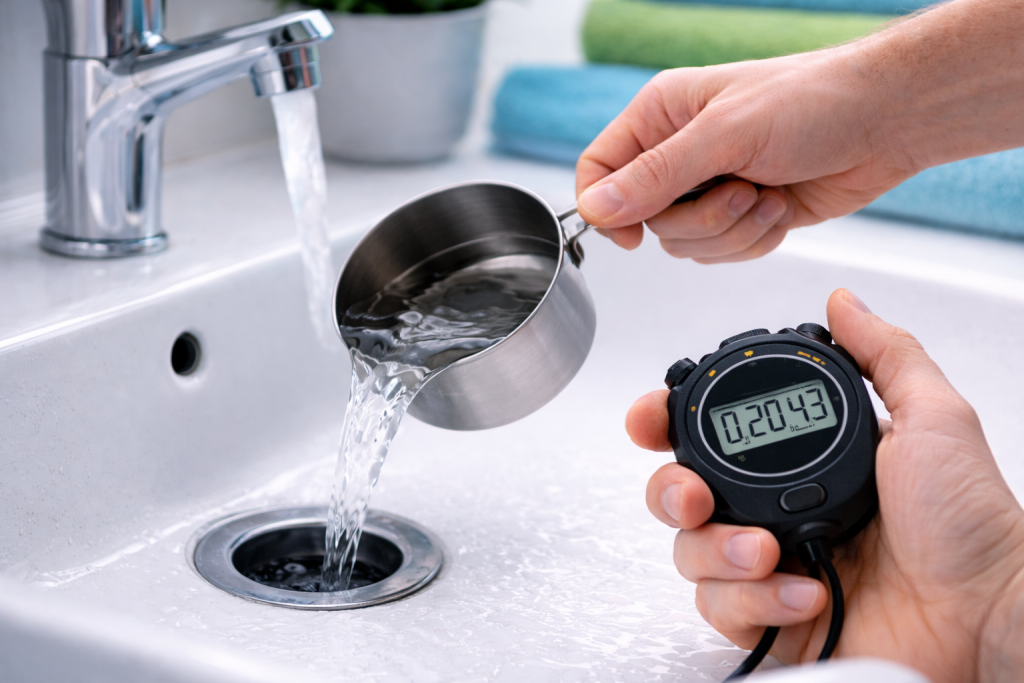
Secondly, fill a one liter container and pour it in quickly while timing how long it takes to fully clear. Meanwhile, listen for gurgling and watch for bubbles, because both can point to trapped air and partial blockage. After that, repeat once more, because consistency matters more than a single result.
What “normal” looks like
A healthy drain clears fast and sounds calm. That is to say, you should not hear repeated gulping, and you should not see bubbling that continues after the water level drops. Similarly, the second pour should clear about as quickly as the first.
If your tub clears slowly but steadily, it may be early buildup from hair and soap. However, if it hesitates, then suddenly surges, the pipe may be narrowing in one spot and releasing in pulses.
What “needs a pro clean” looks like
If the second pour clears noticeably slower than the first, that is a strong clue the pipe is not recovering. Consequently, you are seeing a partial restriction that holds water and debris instead of flushing it away. Also pay attention to smells that return within hours, because odor often means organic material is sitting in the line.
If you hear gurgling in a nearby drain when you run water, you may have a venting or main line issue. Therefore, the problem may be bigger than one fixture, especially in older homes or homes with big trees.
Common causes behind a failing home test
In bathrooms, the usual mix is hair, soap, and product residue that clings to the pipe wall. For example, conditioners and body washes can leave a film that traps more hair over time. If your results point to a bathroom issue, proper cleaning is usually more effective than repeated plunging, and you can learn more about bathroom drain cleaning Calgary.
In kitchens, grease is the main culprit because it cools inside the pipe and collects crumbs. Moreover, “flushable” habits like rinsing oily pans can create the same buildup even if you use dish soap. If your kitchen sink fails the test, take a look at kitchen drain cleaning Calgary as a next step.
When to stop DIY and call Canadian Drains
DIY steps can help when you are dealing with a minor slowdown. However, if the test shows slow clearing, repeat gurgling, or quick return of odors, it is time to move from guessing to proper cleaning. Above all, avoid pouring harsh chemicals into a drain that is already restricted, because it can sit in the pipe and create a more difficult service call.
If the issue seems to affect more than one drain, professional equipment can confirm what is happening inside the line. In addition, a visual check can prevent repeated clogs by identifying scale, roots, or a belly in the pipe. Canadian Drains can use camera inspection to pinpoint the trouble spot instead of treating symptoms.
What a professional clean changes
A professional clean restores the full inner diameter of the pipe, not just the center path where water happens to slip through. Therefore, your drain clears faster and stays stable during busy times like mornings, laundry days, or family gatherings. Most importantly, it reduces the chance of backups that can damage floors, cabinets, and finished basements.
A proper service also matches the method to the situation. For instance, a bathroom line with hair buildup needs a different approach than a kitchen line with grease, and a main sewer line may need deeper cleaning. If you want to review the options, start with drain cleaning in Calgary.
A simple habit that keeps the test “passing” longer
Use strainers, wipe greasy pans before washing, and run hot water for a short time after heavy use. Likewise, schedule a proactive cleaning when you notice the test results changing month to month. If you want help planning the right timing, you can reach Canadian Drains through the Canadian Drains website and keep small issues from turning into emergencies.
FAQs
How often should I do the quick home drain test?
Do it every one to two months, and also after any unusual event like a small backup or a strong odor. Consequently, you will spot change early and plan service before the drain fully blocks.
Does boiling water fix slow drains?
It can help soften minor grease in a kitchen line. However, it rarely removes buildup stuck to the pipe wall, so the slowdown often returns. Therefore, treat it as a short term step, not a solution.
What if only one fixture fails the test?
That usually points to a localized blockage in that branch line. In other words, the main line may be fine. Still, a pro clean can remove the buildup fully so the problem does not keep coming back.
Why do I hear gurgling when water drains?
Gurgling often means air is trapped because water cannot move freely, or the venting is affected. Consequently, it can signal a deeper restriction that needs professional attention, especially if multiple drains make noise.
Is a professional cleaning messy or disruptive?
A proper service is typically clean and controlled, with equipment set up to protect floors and work areas. Moreover, the goal is fast restoration of flow with minimal disruption, especially when the issue is caught early with the home test.