
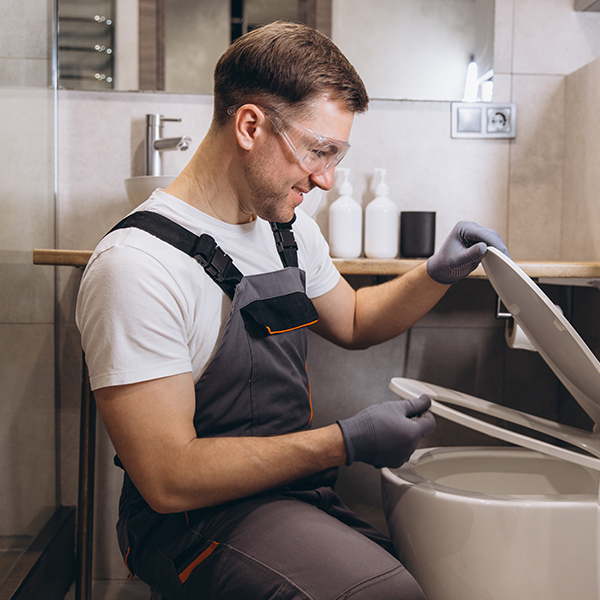
Canadian Drains provides dependable toilet drain cleaning in Calgary for homes dealing with weak flushes, gurgles, and slow bowls. A toilet that struggles to clear is more than an annoyance. It often signals a clog forming deeper in the line. Left alone, a small blockage can grow into a full backup. The fix is usually straightforward when handled early. Below we explain what goes wrong, the signs to watch, and how our team restores a strong, clean flush.
Why Toilets Lose Their Flush
A healthy toilet clears the bowl in one strong pull. When that power fades, something is blocking the path. The trap and the branch line are the usual trouble spots.
Industry estimates suggest that a large share of toilet clogs come from items that should never be flushed. Wipes, cotton products, and paper towels top that list. They do not break apart the way toilet tissue does. Instead they catch and build until water barely moves.
Older toilets add to the challenge in many Calgary homes. Mineral scale slowly coats the rim jets and the trap. As those openings shrink, the flush loses force. A weak flush then leaves more waste behind with each use. That waste builds on itself until the bowl drains poorly.
Common causes of a blocked toilet
- So-called flushable wipes that never break down
- Too much toilet paper used at once
- Toys or objects dropped into the bowl
- Mineral scale under the rim and in the trap
- A deeper clog in the branch or main line
Signs You Need Toilet Drain Cleaning
Your toilet gives early hints before it fails. Paying attention saves you from an overflow. A few clues stand out.
A weak or slow flush is the clearest sign. You may see the water rise high before it drains. Gurgling from the bowl or a nearby drain points to trapped air. A smell that lingers often means waste is stuck in the line.
Red flags to watch for
- Water rising near the rim after a flush
- Bubbling in the bowl or tub when you flush
- Repeat clogs that return within a week
- A faint sewage odour in the bathroom
Do not wait for a full overflow to act. Each of these signs points to a clog that is still growing. The earlier we step in, the simpler the repair stays. A short call today can save a stressful cleanup tomorrow. Trust your instincts when a toilet does not feel right.
Symptoms, Causes, and Fixes
This quick table connects each warning sign to its likely cause and our usual step. It helps you understand the problem before we arrive.
| Symptom | Likely cause | What we do |
|---|---|---|
| Weak flush | Partial clog in the trap | Auger the trap and restore flow |
| Water rises then drains | Blockage in the branch line | Clear the line with a closet auger |
| Gurgling bowl | Trapped air from a deeper clog | Locate and remove the blockage |
| Multiple slow drains | Possible main line issue | Camera inspection, then clearing |
Our Toilet Drain Cleaning Approach
We start by checking how the toilet flushes and drains. This tells us where the clog likely sits. We never force a fix without knowing the cause.
Our technicians use a closet auger built for toilets. It clears the trap without scratching the bowl. For a deeper blockage, we may extend the cleaning into the branch line. When a clog keeps coming back, we recommend a sewer camera inspection to see inside the pipe.
When the problem runs deeper
If several fixtures back up together, the trouble may sit in the main. In that case we shift to clearing the main sewer line rather than just the toilet. To understand why wipes cause so much damage, the U.S. Environmental Protection Agency explains what belongs in the trash instead. Catching a main line issue early prevents a messy backup.
Why Prompt Toilet Drain Cleaning Matters
Ignoring a slow toilet rarely ends well. A partial clog keeps catching more waste with every flush. The blockage grows until the bowl overflows onto the floor. That overflow spreads germs and can damage flooring fast.
Timely toilet drain cleaning stops this chain before it starts. We clear the line while the clog is still small and simple. This protects your bathroom and keeps your flush strong. It also spares you the stress of an emergency on a busy day. A quick response is always easier than a full cleanup.
Risks of waiting too long
- An overflow that soaks floors and subfloor
- Germs spread across the bathroom
- A clog that reaches the main line
- Damage to tile, grout, and nearby walls
How to Protect Your Toilet Line
Good habits keep your toilet flushing strong. The rules are simple and easy to follow. Share them with the whole household.
- Flush only toilet paper and human waste
- Keep wipes, floss, and cotton out of the bowl
- Use a trash bin for everything else
- Avoid harsh chemical cleaners that harm pipes
- Act on a weak flush before it becomes a clog
Teach these rules to children and houseguests too. Many clogs start with a single item flushed by mistake. A small sign near the toilet can remind everyone what belongs in the bin. This simple step prevents many service calls each year.
Keep a plunger within easy reach for minor clogs. A flange plunger works best on a toilet bowl. For anything it cannot clear, resist the urge to force it. A gentle, informed approach protects your pipes far better. When in doubt, a quick call to our team saves time and worry.
If a clog will not clear, get in touch with our team and we will respond quickly.
Frequently Asked Questions
What causes a toilet to drain slowly?
A slow toilet usually points to a partial clog in the trap or branch line. Toilet paper, wipes, and foreign objects are common causes. Mineral buildup under the rim can also weaken the flush. We find the exact spot before we clear it.
Are flushable wipes really safe to flush?
No, despite the label. Most wipes do not break down like toilet paper. They snag on rough spots and build into a solid mass. This is one of the most frequent causes of a blocked toilet line.
Can a plunger fix every toilet clog?
A plunger clears many simple clogs near the bowl. Deeper or repeat blockages need a proper auger. If plunging does not work within a few tries, stop and call us. Forcing it can push the clog further down.
Does a slow toilet mean a sewer problem?
Sometimes. If several fixtures drain slowly at once, the main line may be involved. A single slow toilet is usually a local clog. We can run a camera to confirm the cause if needed.
Contact Canadian Drains
Ready to get your drains flowing again? Our team is here to help seven days a week.
- Phone: (403) 618-3752
- Address: 119 Mt Copper Park SE, Calgary, AB T2Z 2K1
- Hours: Monday to Sunday, 24 hours a day
Call us anytime for honest advice. We give a clear quote only after we assess the problem in person.