
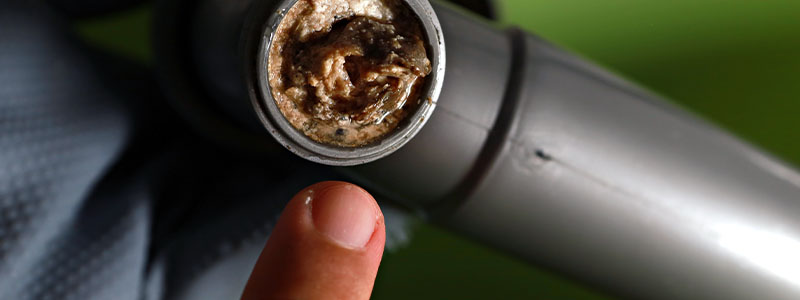
The kitchen sink is arguably the most used drain in your home, and it’s often the victim of fats, oils, and grease (FOG) disposal. While it might seem harmless to pour that hot bacon grease or cooking oil down the drain, what happens next is a serious threat to your home’s plumbing and the environment.
At Canadian Drains, we consistently deal with the consequences of FOG buildup, and the results are often costly and completely avoidable.
1. The Chemistry of the Clog: Solidification and Adhesion
When you pour hot grease down the drain, it is in a liquid state. However, your drain pipes are typically much cooler.
- Rapid Cooling: As the grease hits the cooler pipe walls, it quickly solidifies into a sticky, waxy substance.
- Adhesion: This waxy material immediately adheres to the inside of the pipes, particularly in the P-trap (the U-shaped bend under the sink) and any rough joints.
- The Accumulator: This sticky coating acts like glue, trapping other solids like food scraps, coffee grounds, and cleaning residue, accelerating the formation of a dense, hard blockage. The pipe diameter starts to shrink with every bit of grease poured down.
2. Immediate Signs of Trouble in Your Home
As the pipe diameter decreases, you will start noticing tell-tale signs of a developing grease problem:
- Sluggish Drainage: The most common indicator. Water begins to drain slowly from the kitchen sink, a clear sign the flow is restricted.
- Foul Odors: As food particles become trapped and embedded in the growing grease plug, they begin to decompose. This decomposition produces unpleasant, rancid, or sewer-like smells that travel back up the drain and into your kitchen.
- Gurgling Sounds: Blockages cause air pockets to become trapped. When water tries to push past the obstruction, the trapped air is released, creating distinct gurgling or bubbling noises.
- Wastewater Backups: Eventually, the accumulation becomes a solid mass that completely obstructs water flow. This results in drain water backing up into your sink, potentially flooding the area with foul, unsanitary water.
3. The Challenges of Removing Grease Clogs
Grease clogs present unique challenges compared to hair or sediment clogs:
- Resistance to Chemicals: Chemical drain cleaners often fail to dissolve thick, waxy grease effectively. They might create a small hole through the center, offering temporary relief, but leaving the bulk of the clog intact to quickly reform. These chemicals can also damage pipe material, especially older lines.
- Snaking Difficulties: Standard plumbing snakes can often just punch a hole through the grease rather than removing the entire blockage. The snake can easily become coated in the sticky grease, making it difficult to pull back without leaving a significant portion of the obstruction behind.
- Professional Intervention Required: A hardened grease clog typically requires specialized, professional methods for complete removal.
4. The Broader Environmental Threat: Fatbergs
The problem extends far beyond your property line. When grease enters the municipal sewer system, it mixes with other FOGs and non-flushable items (like wet wipes) from thousands of homes and businesses.
- The Fatberg Formation: These massive accumulations solidify into giant, concrete-like masses called Fatbergs.
- System Failure: Fatbergs can completely block municipal sewer mains, causing severe back-ups into neighboring homes and significant environmental contamination from sewage overflowing into waterways. The costs associated with removing a single fatberg can be staggering, underscoring the importance of responsible disposal.
Canadian Drains Solution: Prevention and Professional Cleaning
The best solution is prevention: never pour FOGs down the drain.
- Cool and Collect: Pour used cooking oil and grease into an old can or jar. Once solidified, scrape it into the trash.
- Wipe Down: Before washing dishes, wipe excess grease from pots and pans with a paper towel and dispose of it in the garbage.
If you are already experiencing slow drainage due to grease, don’t attempt risky chemical solutions. Canadian Drains utilizes powerful, safe techniques like Hydro-Jetting. This process uses highly pressurized water streams to scour the interior walls of your pipes, completely breaking up and flushing out the stubborn grease, restoring the pipe to its original diameter.
Don’t let a “fatberg” start in your kitchen! If you suspect a grease buildup is slowing your drains, contact Canadian Drains today for expert service and long-lasting solutions.