
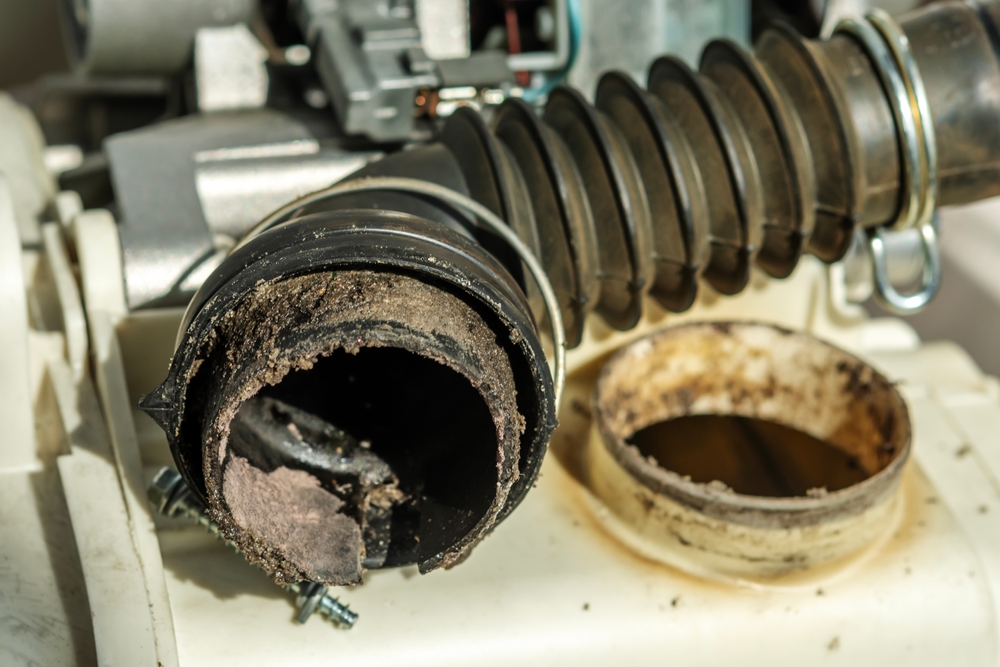
Canadian Drains handles laundry drain cleaning for Calgary households that dread the puddle spreading across the laundry room floor. Your washer pushes out a powerful surge of water every cycle, and the drain has to swallow it fast. When lint and soap residue build up inside the pipe, that surge has nowhere to go. This guide walks through the causes, the fix, and easy prevention. By the end you will know exactly when a quick professional clearing is worth the call.
Why Laundry Drains Struggle More Than You Expect
A washing machine is deceptively demanding on your plumbing. It empties a full tub of water in a matter of seconds. That fast surge tests every inch of the drain line.
Unlike a slow-filling sink, the washer gives the pipe no time to catch up. Even a modest narrowing inside the drain can trigger an overflow at the standpipe. The result is water on the floor before you notice anything is wrong.
Calgary’s hard water adds another layer. Minerals bind with detergent to form a sticky film that clings to pipe walls. Over time that film narrows the passage and traps lint.
Why the Standpipe Is the First to Complain
Most laundry setups drain through a vertical standpipe. It is designed to handle the washer’s surge, but only when the pipe below runs clear. A narrowed line turns that standpipe into an overflow point.
The water rises fast because the pump does not pause for a slow drain. By the time you spot the puddle, the cycle is already pushing more water. Prompt laundry drain cleaning restores the headroom the standpipe needs.
What Really Clogs a Laundry Line
The buildup behind most laundry backups is a predictable mix. Knowing the ingredients makes prevention far easier.
- Lint and loose fabric fibres from every load
- Soap scum and undissolved detergent residue
- Hard-water mineral scale coating the pipe
- Small items like coins or fabric softener sheets
Each item seems harmless on its own. Together they form a stubborn layer that thorough laundry drain cleaning removes for good. A store-bought liquid rarely reaches deep enough to clear it.
Location matters too. Many laundry rooms sit in a basement, so a backup here spreads across a finished floor fast. That is one more reason to treat a slow washer drain as an early warning rather than a minor annoyance.
The Professional Approach to Laundry Drain Cleaning
A proper visit targets the whole line, not just the visible opening. The technician confirms the blockage, clears it, and checks that the surge flows freely again. The table below shows how the pieces fit together.
| Symptom | Likely Cause | What We Do |
|---|---|---|
| Water backs out of the standpipe | Lint and soap buildup narrowing the pipe | Cable or jet the line to full width |
| Slow drain after each cycle | Mineral scale coating the walls | Clear scale and test the flow rate |
| Gurgling from a nearby sink | Shared branch line partly blocked | Inspect and clear the connected run |
| Musty odour near the machine | Trapped debris and stagnant water | Flush the line and reset the trap seal |
Matching the tool to the buildup is what makes the fix last. Soft lint and soap respond well to jetting, while a firm scale layer may need a cutting pass first.
A good technician also checks the connection points, not just the straight run. Elbows and junctions collect debris faster than open pipe, and they are easy to overlook. Clearing them fully is often the difference between a repair that holds and one that fails within a month.
How Buildup Sneaks Up on You
Laundry clogs rarely arrive overnight. They creep in load by load as fibres settle on the pipe wall. You can see the same slow pattern explained in our look at why washer lines lose pressure over time.
Because the change is gradual, many homeowners adjust without noticing. Then one heavy wash day pushes the line past its limit.
You can slow this buildup, but you cannot stop it entirely. Even careful households shed lint and use soap. That is why an occasional professional clearing is a normal part of home upkeep rather than a sign that something is wrong.
When the Problem Runs Deeper
Sometimes the laundry standpipe is only the symptom. If several drains slow together, the branch or main line may share the blockage. In that case a broader whole-home drain service gives a clearer picture than treating the washer alone.
Because the surge arrives so fast, timing matters as much as the tool. A technician tests the line under a realistic flow, not just a trickle, so the fix holds up on a busy laundry day.
Habits That Support Laundry Drain Cleaning
Good laundry drain cleaning lasts longer when a few small habits support it. None of them add real time to laundry day.
- Fit a mesh lint trap on the drain hose and clean it weekly
- Measure detergent carefully to cut soap residue
- Run an occasional hot-water rinse cycle to flush the line
- Space out heavy loads so the drain is not overwhelmed
Industry estimates point to lint and detergent residue as the leading cause of laundry backups in homes. Both are easy to manage once you know the pattern. A little attention now spares you a soggy floor and a scramble for towels later. The Government of Canada explains how everyday household waste affects local water systems in its water pollution overview.
Frequently Asked Questions
Why does my laundry drain overflow during a wash cycle?
A washing machine pumps out a large surge of water in a short time. If lint, soap scum, or fabric fibres have narrowed the pipe, the drain cannot keep up and water backs out of the standpipe. Clearing the buildup restores the flow the pump needs.
What causes buildup in a laundry drain?
Lint, detergent residue, and tiny fabric fibres are the main culprits. Over months they cling to pipe walls and slowly shrink the opening. Hard-water minerals in the Calgary area can make the coating stickier and harder to rinse away.
Can I prevent laundry drain clogs myself?
Yes, a lint trap on the drain hose catches most fibres before they enter the pipe. Running an occasional hot rinse and avoiding excess detergent also help. When flow stays slow despite these steps, a professional clearing is the reliable fix.
Is a standpipe backup an emergency?
It can escalate quickly because the machine keeps pumping regardless of the blockage. Water can spill across a laundry room floor in minutes. Booking a prompt clearing prevents water damage to floors and nearby walls.
Contact Canadian Drains
Have a drain that will not cooperate? Reach the local team directly and book a visit that fits your day.
- Phone: (403) 618-3752
- Address: 119 Mt Copper Park SE, Calgary, AB T2Z 2K1
- Hours: Open 24 hours a day, 7 days a week